Carbon Fiber Wrapping for Beams and Slabs: When Is CFRP Strengthening Required?
26/09/2026
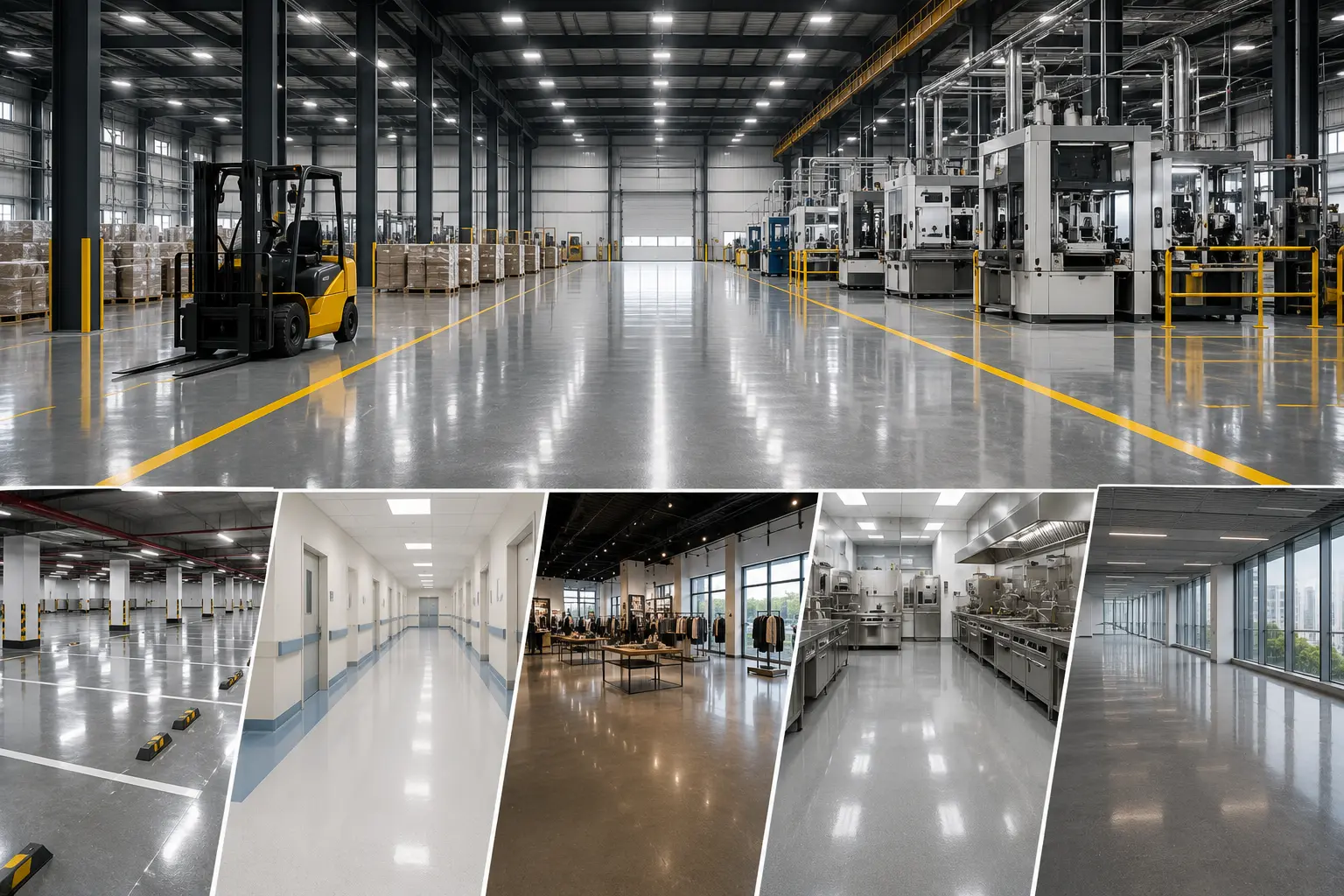
Industrial and commercial facilities require strong, durable, and reliable flooring systems that can handle continuous operational pressure. Standard flooring surfaces often fail in industrial environments because they are not designed to withstand heavy machinery, chemical exposure, moisture, and constant movement. This is why industrial flooring solutions have become an important part of modern infrastructure development.
Industrial flooring is specially designed to provide strength, safety, and long-lasting performance in demanding environments. Industries such as manufacturing plants, warehouses, pharmaceutical facilities, food processing units, parking areas, and commercial buildings all require flooring systems that can tolerate heavy-duty usage while remaining easy to maintain.
One of the most commonly used industrial flooring systems is epoxy flooring. Epoxy coatings create a smooth and durable surface that resists chemicals, abrasion, and impact. Another advanced solution is polyurethane or PU flooring, which offers excellent flexibility and thermal resistance, making it ideal for industries exposed to temperature fluctuations and moisture.
Industrial flooring also plays a major role in workplace safety. Slip-resistant flooring systems help reduce accidents and create a safer environment for employees and workers. In industries where chemicals and oils are regularly used, anti-slip and chemical-resistant flooring becomes extremely important.
One of the biggest advantages of industrial flooring is reduced maintenance cost. Traditional flooring surfaces often develop cracks, dust problems, and surface damage over time. Industrial flooring systems are designed for long-term performance, reducing the need for frequent repairs and maintenance.
As industries continue to modernize, the demand for durable and high-performance flooring systems is growing rapidly. Industrial flooring is no longer just a surface layer — it is a long-term investment in safety, efficiency, and operational reliability.