
Carbon Fiber Wrapping for Beams and Slabs: When Is CFRP Strengthening Required?
26/09/2026
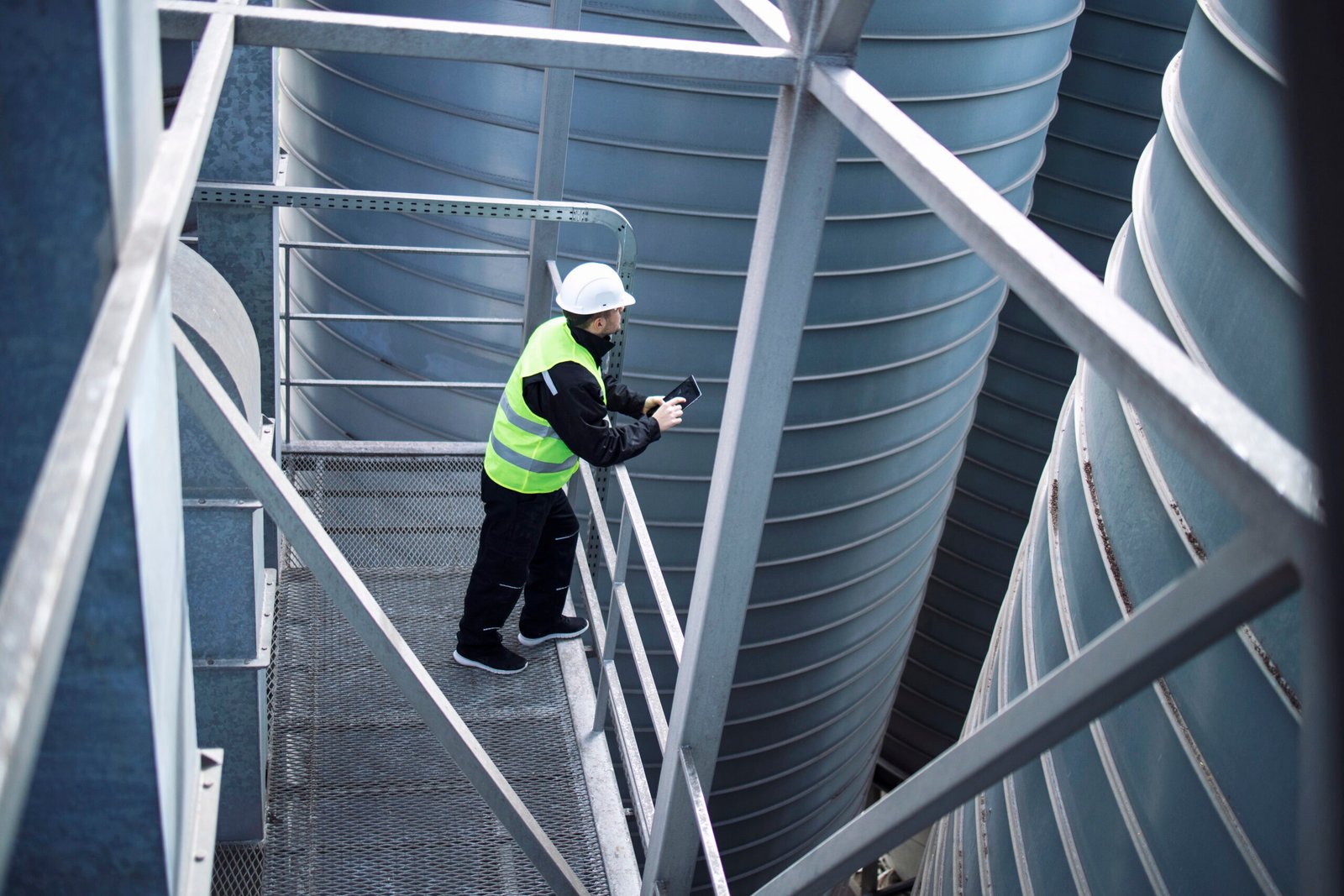
Nobody wants a silo failure on their watch. A cracked wall, a leaning structure, or a corroded support can shut down operations fast, and the cost of ignoring early warning signs is always higher than the cost of catching them. We’ve walked into more than a few plants where a “small” crack turned out to be years of hidden deterioration. So, let’s go through what silo structural inspection actually involves, and the signs that tell you it’s time to call someone in.
Why Silos Deteriorate Faster Than People Expect
Silos take a beating that most structures never face. They hold constant pressure from stored material, deal with temperature swings, vibration from loading and unloading, and in many cases, exposure to moisture or corrosive substances. Steel silos rust from the inside out sometimes, which means damage can be well underway before it’s visible from outside. Concrete silos crack under repeated loading cycles, especially near support columns and discharge points where stress concentrates. Add in India’s humidity and temperature extremes, and you’ve got a structure that ages faster than a typical building. Industrial silo inspection isn’t optional maintenance. It’s how you catch problems while they’re still cheap to fix.
Seven Warning Signs Your Silo Needs Attention
Some damage announces itself. Other damage stays quiet until it’s serious. Here’s what to watch for.
If you’re seeing two or more of these at once, that’s not a coincidence. It usually means the structure has been under stress for a while.
What a Proper Silo Structural Inspection Assesses
A real assessment goes beyond a quick walk-around. It looks at the whole picture, structure and support system together. The inspection team checks wall thickness and looks for corrosion patterns on steel silos, since thinning walls under pressure are a serious safety concern. For concrete silos, cracks get mapped and measured to understand whether they’re stable or actively growing. Support legs, anchor bolts, and foundations get checked too, because a silo is only as strong as what’s holding it up. Silo repair assessment also includes checking for signs of internal buildup or material bridging, since uneven loading inside the silo can put unexpected stress on the walls. None of this can be judged accurately from a distance. It takes someone who knows what silo damage progression actually looks like.
Common Causes Behind Silo Structural Damage
Understanding why silos fail helps you prevent the next problem, not just fix the current one. Corrosion is the biggest problem for steel silos, and it’s usually moisture getting trapped between panels or condensation forming inside as temperatures shift. For concrete silos, it’s more often repeated loading cycles combined with construction quality that wasn’t great to begin with, and that combination tends to crack around stress points over time. Foundation settling is another quiet cause. If the ground beneath a silo shifts even slightly, the whole structure has to compensate, which shows up as cracks or a visible lean over time. Overloading beyond the silo’s rated capacity accelerates all of this, sometimes dramatically.
Repair Options Once Damage Is Confirmed
The right fix depends entirely on what the inspection finds, but a few solutions come up often. Cracks in concrete silo walls usually get treated with epoxy or polyurethane injection grouting, which brings back structural continuity and stops water from getting in any further. Where corrosion has already weakened steel or concrete elements, rebar corrosion treatment or protective coatings help stop the deterioration from spreading before it gets worse. For silos carrying more load than originally designed, or showing serious wall thinning, carbon fiber wrapping and jacketing systems can restore strength without a full rebuild. Surface preparation, including grinding, blasting, or hydro-jetting, comes first in almost every repair scenario, since patching over a weak surface never holds long term.
What Happens If Silo Damage Goes Ignored
Ignoring early warning signs rarely ends quietly. Small cracks widen under repeated loading cycles, and what starts as a cosmetic issue can progress into a structural one within a year or two. Beyond safety risk, there’s real financial exposure too. An unplanned shutdown for emergency repair costs far more than scheduled maintenance, and it disrupts production in ways that ripple through your entire operation. Catching issues during routine inspection almost always costs less, in money and in stress.
How We Approach Industrial Structural Assessments
We’ve handled structural repair work on cooling towers and large industrial facilities, and the same careful, engineering-first approach applies to silo assessment and repair. Operational downtime is expensive, so we plan our site visits and repair sequencing to minimize disruption to your production schedule wherever possible. Our team uses advanced tools alongside experienced engineers to assess concrete and steel structures accurately, then recommends the right repair system, whether that’s crack injection, corrosion treatment, or carbon fiber reinforcement. Being ISO 9001:2015 certified means our process follows a documented standard, not guesswork, from the first site visit through final sign-off. If your silo has been showing any of the signs above, don’t wait for it to get worse. Get in touch with us.
Frequently Asked Questions
How often should an industrial silo be inspected?
Most industrial silos benefit from a formal structural inspection at least once a year, though silos handling corrosive or heavy materials may need more frequent checks. Visual walk-arounds by plant staff should happen more regularly, with a professional assessment scheduled whenever unusual signs appear between formal inspections.
Can a leaning silo be repaired without replacing it?
In a lot of cases, yes. A slight lean caused by foundation settling can often get corrected through foundation stabilization and structural reinforcement, no full replacement needed. How far it can be salvaged really depends on how much the silo has actually shifted and what’s causing it underneath.
What’s the difference between a steel silo inspection and a concrete silo inspection?
Steel silo inspections are mostly about corrosion, wall thickness, and weld integrity, since rust is what tends to bring these down. Concrete silo inspections lean more toward crack mapping, spalling, and rebar corrosion. Either way, the support structure and foundation get checked no matter what the silo’s made of.
Does weather affect how quickly a silo deteriorates?
Yes, a lot actually. High humidity speeds up corrosion in steel silos, while temperature swings put concrete through repeated expansion and contraction that wears it down over time. Facilities in coastal or heavily industrial areas tend to see faster deterioration and often need to inspect more often because of it.
Is it safe to keep using a silo while repairs are being planned?
Comes down entirely to how bad the damage is once it’s inspected. Minor surface issues usually don’t stop operation while repairs get planned out, but active leaning, serious corrosion, or wall thinning might mean cutting the load or shutting down temporarily until repairs are actually done and it’s safe again.