Specialist Crack Injection Grouting Contractor in India
Every monsoon season reveals what dry weather hides. Basement walls weeping with moisture, terrace slabs leaking through hairline fractures, concrete columns with cracks that have been quietly widening for years. By the time these problems become visible to the eye, the damage has already spread well beyond the surface.
Fix and Fine is a specialist crack injection grouting contractor serving clients across India. We diagnose, specify, and inject the correct grouting system for every type of concrete crack, stopping water ingress and restoring structural integrity without excavation or demolition. With 17+ years of experience, 500+ completed projects, and ISO 9001:2015 certification, Fix and Fine brings specialist expertise to crack injection grouting projects across India.
What Does a Crack Injection Grouting Contractor Do?
Injecting grout without first understanding the crack is expensive guesswork. Not all cracks behave the same way. An active leaking crack in a basement wall needs a hydrophilic polyurethane resin that reacts with water and expands to seal it. A suitable dry structural crack in a load-bearing beam may require a two-component epoxy system designed to restore structural continuity, depending on the crack condition and repair requirements. Using the wrong product can lead to premature repair failure.
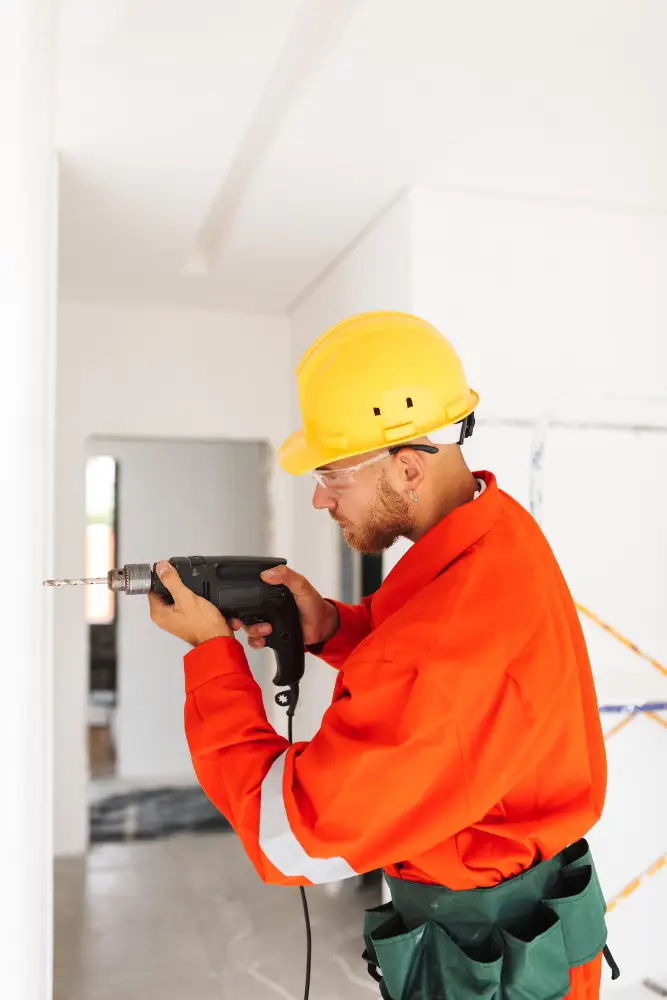
Fix and Fine maps every crack on site before any material is specified. We record crack width, depth, moisture condition, and movement. Injection ports are drilled at calculated intervals and grout is injected at controlled pressure until the crack is fully saturated from the inside out.
Noticed cracking in your building? Get a crack assessment across India.Our Crack Injection Grouting Services
We inject two-component, high-strength epoxy resin into dry structural cracks in beams, columns, slabs, and foundations. Once cured, the epoxy bonds the crack faces and can help restore structural continuity, subject to the crack condition and specified repair system.
Where water is actively present, we use suitable hydrophilic polyurethane resin that reacts with moisture and expands to seal cracks and help control water ingress. PU grouting is commonly used for basements, water-retaining structures, and applications where active water ingress is present during repair.
Pressure-injected cementitious grouts consolidate voids, honeycombing, and cavities in concrete foundations, retaining walls, and mass concrete elements. Used where the volume to be filled is too large for resin injection alone.
We carry out crack injection on bridges, flyovers, culverts, and underground infrastructure across India. These structures demand precise port spacing, correct pressure calibration, and full engineering documentation throughout the repair process.
Why Grout Selection Is Not Guesswork
India's climate creates crack conditions that are rarely straightforward. A basement can experience significant moisture during the monsoon and changes in temperature and moisture conditions throughout the year. Terrace slabs can face heat, humidity, temperature changes, and ponding water at the same time. A rigid epoxy system may not be suitable for a crack that remains active or continues to move. A PU foam applied where structural restoration is needed solves nothing.
Fix and Fine assesses moisture levels, substrate condition, and crack activity before any grout is selected. That step is what separates a repair that holds from one that reopens at the next monsoon.